
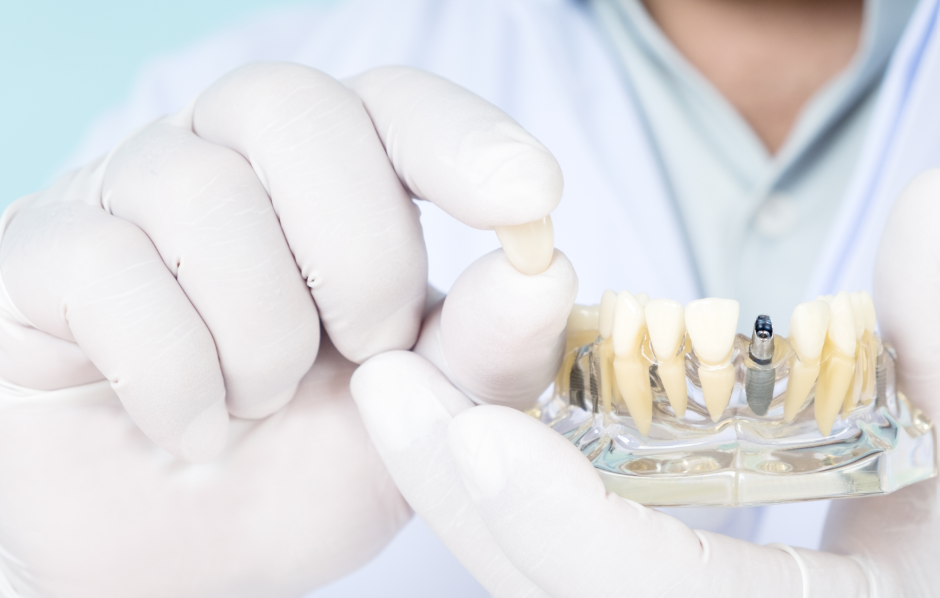
If you’ve ever needed a dental crown, you may have wondered how your dentist makes it look so much like a natural tooth. After all, teeth aren’t simply “white.” They have subtle differences in hue, brightness, translucency, and even texture. Creating a crown that blends seamlessly with your smile requires more than simply picking a shade that looks close.
Here’s a closer look at how dentists color-match dental crowns.
It Starts With a Shade Guide
One of the most common tools dentists use to determine the appropriate tooth shade is a shade guide. This tool contains a series of standardized tooth-colored samples that can be compared with your natural teeth.
Your dentist will typically examine the shade of the surrounding teeth and determine which sample is the closest match. The process is usually performed under appropriate lighting because different types of light can affect how colors appear.
Your dentist may also consider several characteristics rather than focusing on one overall shade. The goal is to create a crown that looks natural alongside the rest of your smile.
Hue, Value, and Chroma Matter
Dental professionals can evaluate color using concepts such as hue, value, and chroma.
Hue refers to the basic color family of the tooth. Value describes how light or dark the tooth appears, while chroma refers to the intensity or saturation of the color.
Dentists and dental laboratories may also consider translucency, which is particularly important for creating natural-looking crowns. Natural teeth allow some light to pass through them, especially around the edges. A crown that is too opaque may look noticeably different from the surrounding teeth even if its basic shade is correct.
Your Surrounding Teeth Are Important
When you’re receiving a crown on a visible tooth, the dentist isn’t simply trying to match an idealized shade of white. The crown needs to coordinate with your existing teeth.
That’s why the shade of neighboring teeth is carefully evaluated. Your dentist may look at several teeth and consider how their colors interact. If you’re having multiple cosmetic restorations, your treatment plan may instead involve choosing a coordinated shade for the restorations as a group.
Lighting and Photos Can Help
Because tooth color can appear different under various lighting conditions, dentists and dental laboratories may use multiple methods to improve accuracy. Digital photography can provide additional information about the tooth’s color and characteristics.
Some dental laboratories also use digital shade-matching technology to supplement traditional shade guides. These tools can help communicate detailed color information between the dental office and laboratory technician who creates the crown.
What Happens If the Crown Doesn’t Match?
Even with careful planning, achieving a perfect color match can be challenging. Natural teeth have complex characteristics that aren’t always easy to reproduce with dental materials.
If a crown appears noticeably different from the surrounding teeth, talk with your dentist. Depending on the situation, adjustments or other solutions may be possible.
A well-matched crown should complement your natural smile rather than calling attention to itself.
About the Practice
Cosmetic and Restorative Dentistry of the Keys provides comprehensive dental care, including dental crowns designed to restore damaged or weakened teeth while maintaining a natural-looking smile. The practice takes a personalized approach to restorative treatment, helping patients understand their options and creating crowns that are designed to blend comfortably and aesthetically with their existing teeth.
Call us at (305) 680-1553 or schedule your appointment online.