
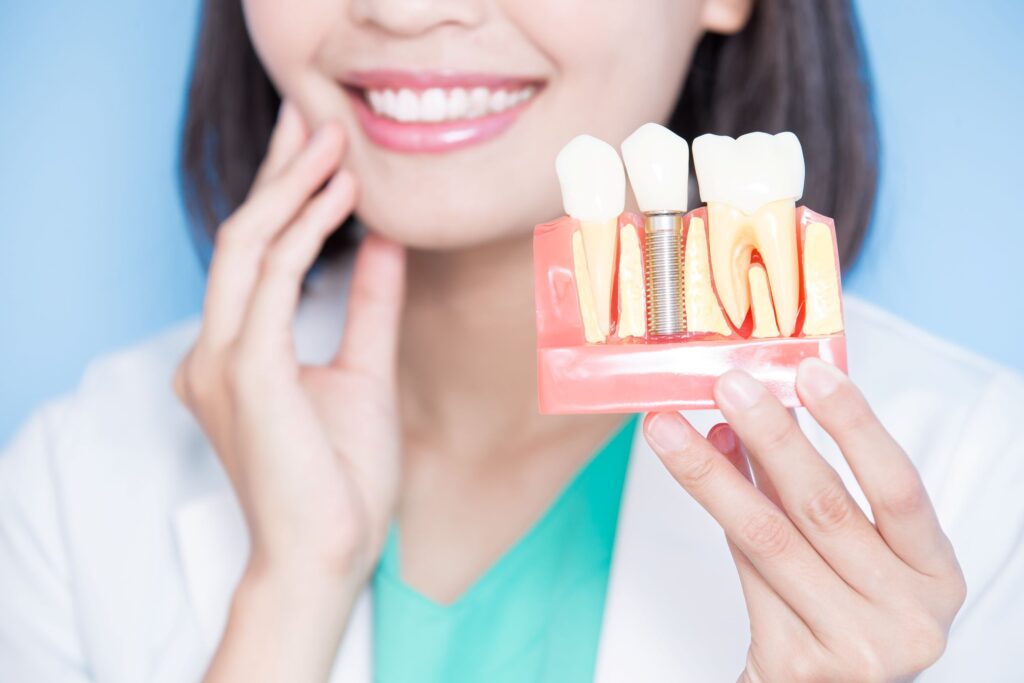
Gaps in your grin left behind by missing teeth can detract from your daily quality of life in a few ways. For instance, you might struggle to eat, speak, or smile confidently, or try to avoid spending time with others if you’re worried about being judged for your appearance.
If you’re seeking a reliable, long-term solution for tooth loss, you might be a good candidate for dental implants. These restorations are typically stronger and more resilient than alternatives, such as dentures and bridges, but that doesn’t make them invincible. Read on to learn more about how to prevent potential failure!
How Do Dental Implants Work?
These are the only replacement teeth that involve surgically placing a support post into your jaw, which eventually fuses with the bone through a process called osseointegration. Once your mouth has healed sufficiently, your dentist can make impressions of your teeth and gums to design a one-of-a-kind restoration to be anchored by this pole, which has essentially become a permanent part of your mouth.
A single rod can be capped with a lifelike dental crown to replace one missing tooth, or two or more implants can be strategically placed to anchor specially designed dentures or a bridge to rebuild your arches.
What Causes Dental Implants to Fail?
The unique placement of these replacements typically means they’re stronger and less prone to injuries than other options, but that doesn’t mean they can’t be harmed. Some common causes of dental implant failure can include:
- Peri-implantitis. This infection of the gums occurs when bacteria in your mouth penetrate the surgical site and erode the materials anchoring the post in place.
- Failed osseointegration. If your jaw is too thin to start or if it doesn’t produce enough new bone growth, it might not fuse correctly with the support rod placed there, which can cause it to become destabilized or dislodged.
- Physical trauma. If you sustain a blow to the face, like during a sporting game or other close-contact activity, you could lose your new tooth.
- Unhealthy habits. Smoking can significantly increase the likelihood of failure because it suppresses your immune system, and if you grind your teeth, the added pressure could push the rod(s) out of place.
How Can I Prevent Potential Implant Failure?
Although rare, there’s always a small risk that your implant(s) could fail. You can help avoid this by:
- Keeping your mouth clean. You’ll need to brush and floss as usual to remove harmful plaque and bacteria, taking care not to floss so deeply into the pocket of your implant that you damage its protective seal.
- Protecting your teeth. Wearing a custom-fitted mouthguard or nightguard can cushion your grin and prevent physical injuries.
- Schedule routine checkups. Seeing your dentist every six months allows them to monitor your healing and treat any areas of concern, like swollen gums, before they can progress and harm your new tooth.
Thankfully, this procedure has an incredibly high success rate of more than 90%, meaning that most patients won’t develop complications as long as their procedure is performed by a licensed professional and they follow the provided post-op instructions carefully!
About the Practice
At Cosmetic & Restorative Dentistry of the Keys, you and your loved ones benefit from a team of providers eager to help you build and maintain beautiful, healthy smiles. Dr. Cobb and Dr. Martin, who are accomplished general dentists, collaborate with Dr. Mazor, an expert in periodontics, to provide a comprehensive menu of services to meet all your unique needs. They have the specialized training and state-of-the-art equipment to place and restore dental implants in the office for your convenience. You can request an appointment on the website or call (305) 680-1553.